In the perfect world, we would hang our towels on the clothesline after each use, letting the sun's rays and gentle wind dry them for next day's use. Let's face it, however, Nirvana rarely exists. Most of us don't have the time or the space for a clothesline. And even if we did the weather wouldn't be accommodating most of the time.
Thankfully the perfect world can be achieved in other ways and it's called a heated towel rail. Now, the only question is which one do you buy – a horizontal or a vertical heated towel rail? Before we explore, here's a little tease... The differences can't be summed up by simply the way the rail runs.
Horizontal heated towel rails
Horizontal heated towel rails really need no introduction as most people have seen them before. Essentially they have two vertical rails at each side, joined by horizontal rungs on which towels are placed. They are sometimes called ladder-style heated towel rails, as the narrower units do look like ladders.
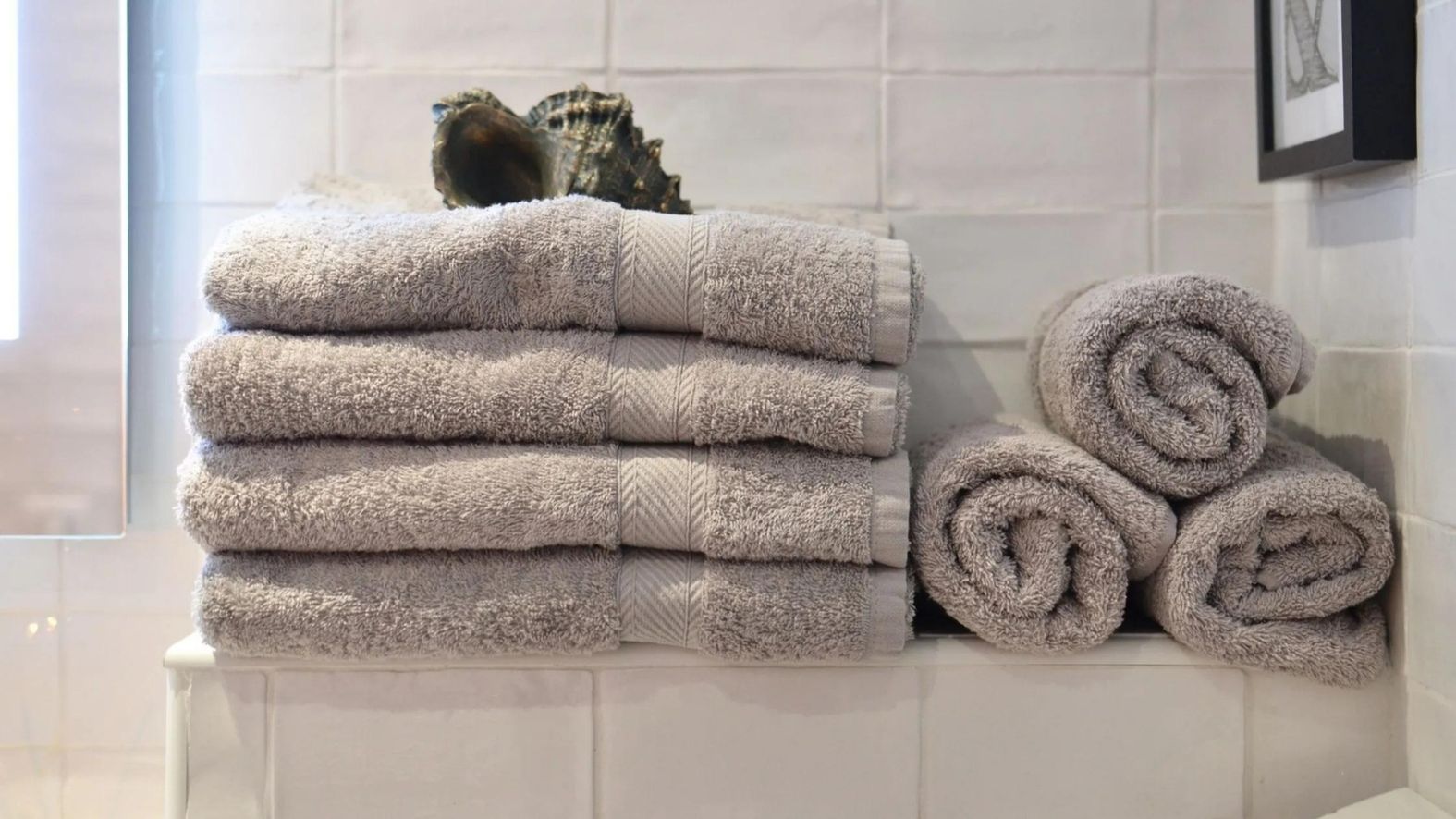
They generally perform their function well. When a towel is placed over the horizontal rungs and left for a few hours with the towel rail on, the towel will be dry and be nice and toasty for when you next have a shower or bath.
The Achilles' heel of horizontal heated towel rails, however, is that most people have more than one towel that needs drying. Unless you have a very large towel rail, which takes up massive amounts of bathroom wall space, and small towels, you need to overlap the towels. All of a sudden, those towels aren't being dried effectively or you may find you need to leave your towel rail on all day and all night to do the job.

Why vertical heated towel rails work better
While less common, vertical heated towel rails aren't unusual and there are many companies who make them. In its simplest form, they can look like a standard single towel rail that's been hung the wrong way. The idea with these rails is that you drape your towel over the top end of the rail, which means that much of the towel touches the rail.
What this means is that they are more effective at doing what they're designed to do – dry towels. At Eskimo, we conducted research to prove that these types of towel rails do a better job of drying towels. Initially, we simply hung towels over the vertical rails of a horizontally styled ladder towel rail to prove our point. Perhaps not very creative but it proved our theory.
While more than one vertical rail is needed for most bathrooms, the other advantage is that they take up less precious space. This is even more important if you have a small bathroom.
Another, less obvious benefit of the vertical towel rail, is that less energy is wasted. So, you save money while having your towel dried more efficiently. That is Nirvana.

The science behind vertical heated towel rails
Here's where it gets interesting. When towels hang vertically, they allow for better air circulation around them, reducing the formation of humid air pockets that are common with horizontal rails. Enhanced airflow promotes faster drying and helps prevent those damp, musty odors typical in poorly ventilated spaces.
Lab testing shows vertical heated towel rails like the Gordon dry towels in about 84 minutes, compared to 111 minutes for traditional 350-watt ladder rails. That's a third quicker while using 43 percent less energy. The quicker drying capability means reduced operating time, leading to lower energy consumption and lower running costs.
Vertical towel rails go hi-tech
Eskimo is not the only company that worked out that vertical towel rails actually worked better, but we wanted to go a step further. With an attitude of 'there are no rules' coupled with our aim of great product design, we set about revolutionising the heated towel rail.
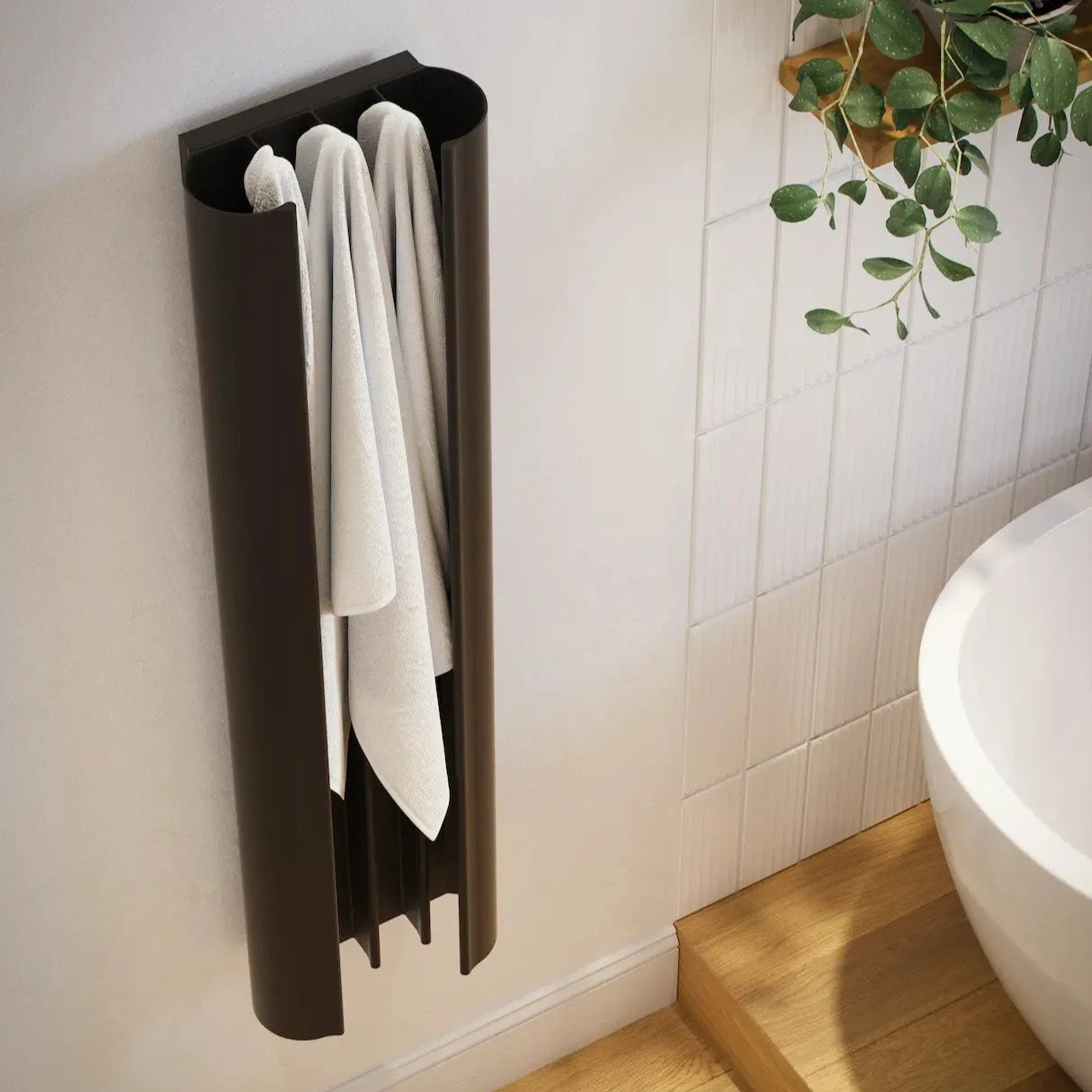
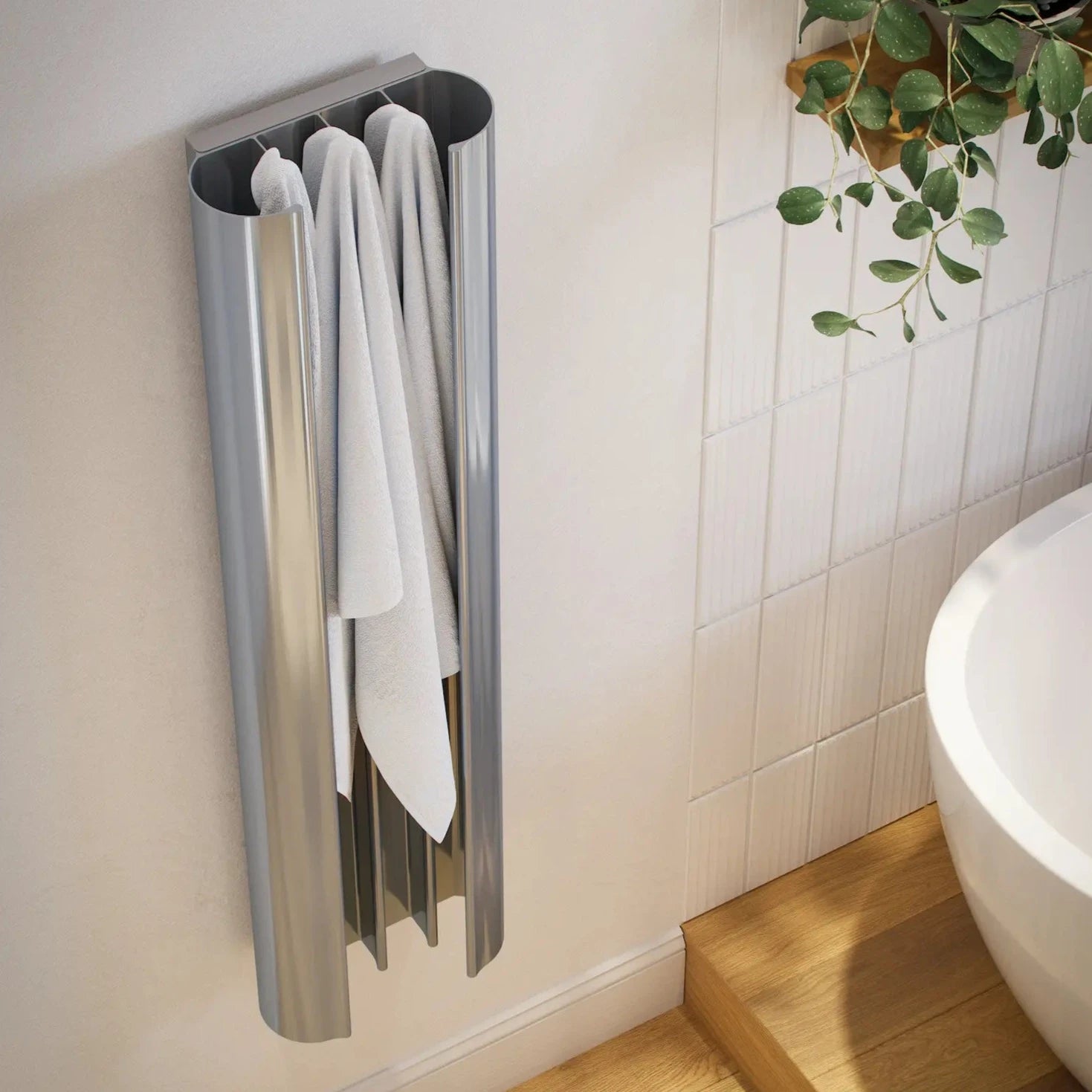
From a practical standpoint, we wanted our vertical heated towel rails to be able to accommodate four large towels. Not those small ones you find in cheap hotel rooms. We mean four bath sheet-size towels. Not every bathroom has this many towels, but many do and the horizontal towel rail simply couldn't dry this number of towels effectively or efficiently.
More than this, we wanted our towel rails to be aesthetically pleasing. Whether empty or filled with towels, we wanted people to be able to look at our towel rail and consider flirting with it. After all, designing architectural, clean lined forms coupled with robust engineering is what we do.
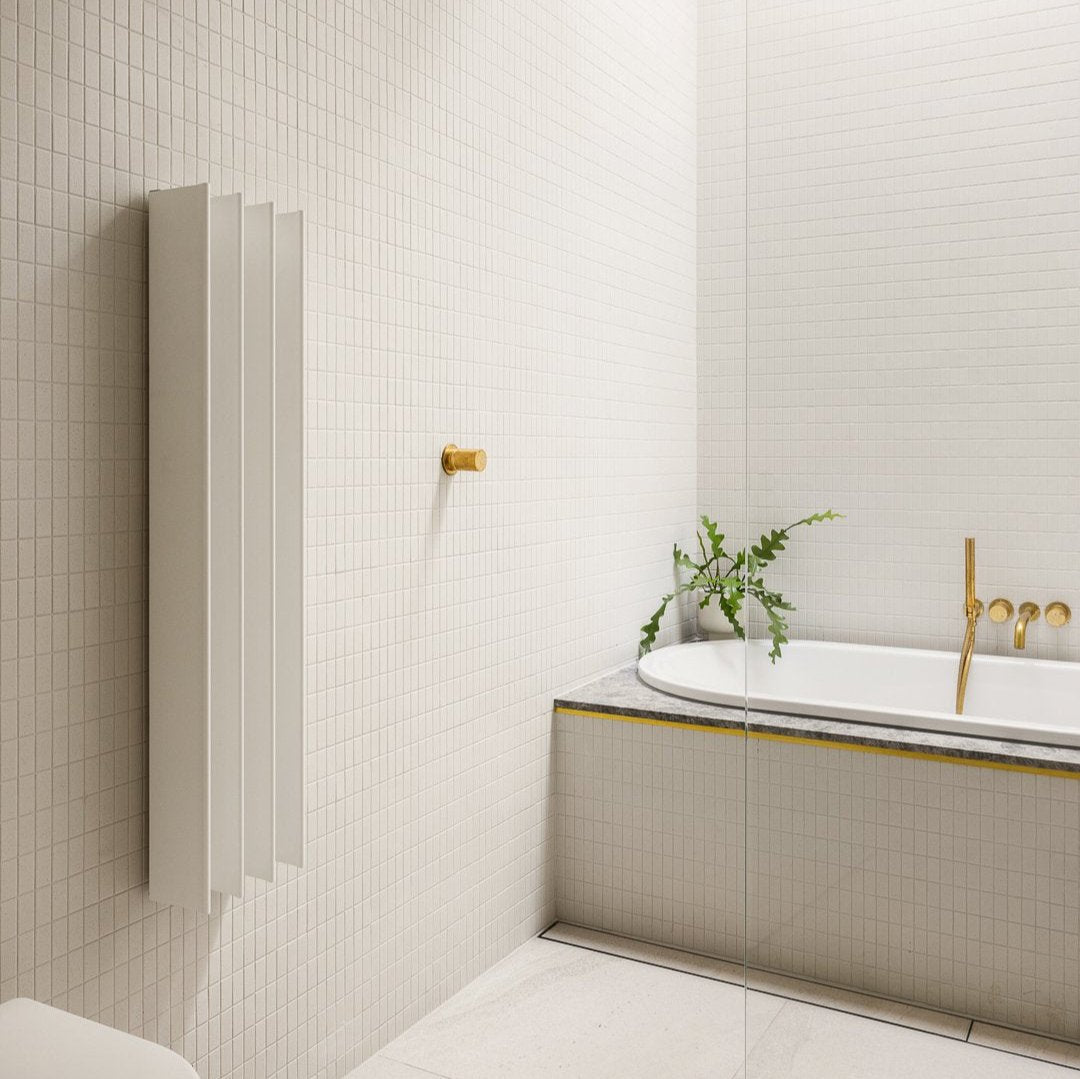
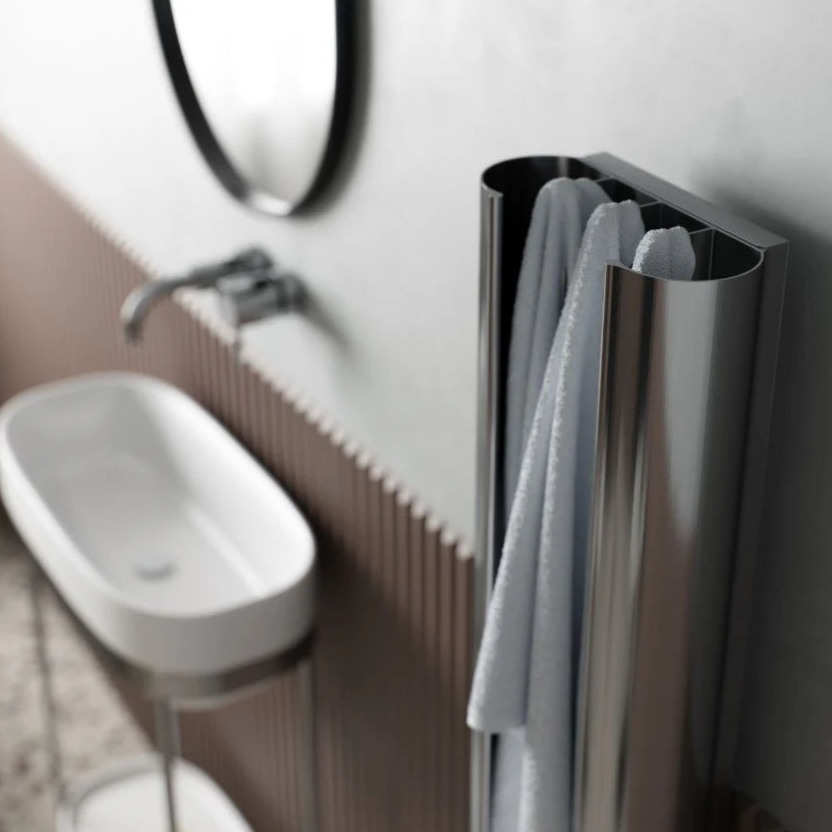
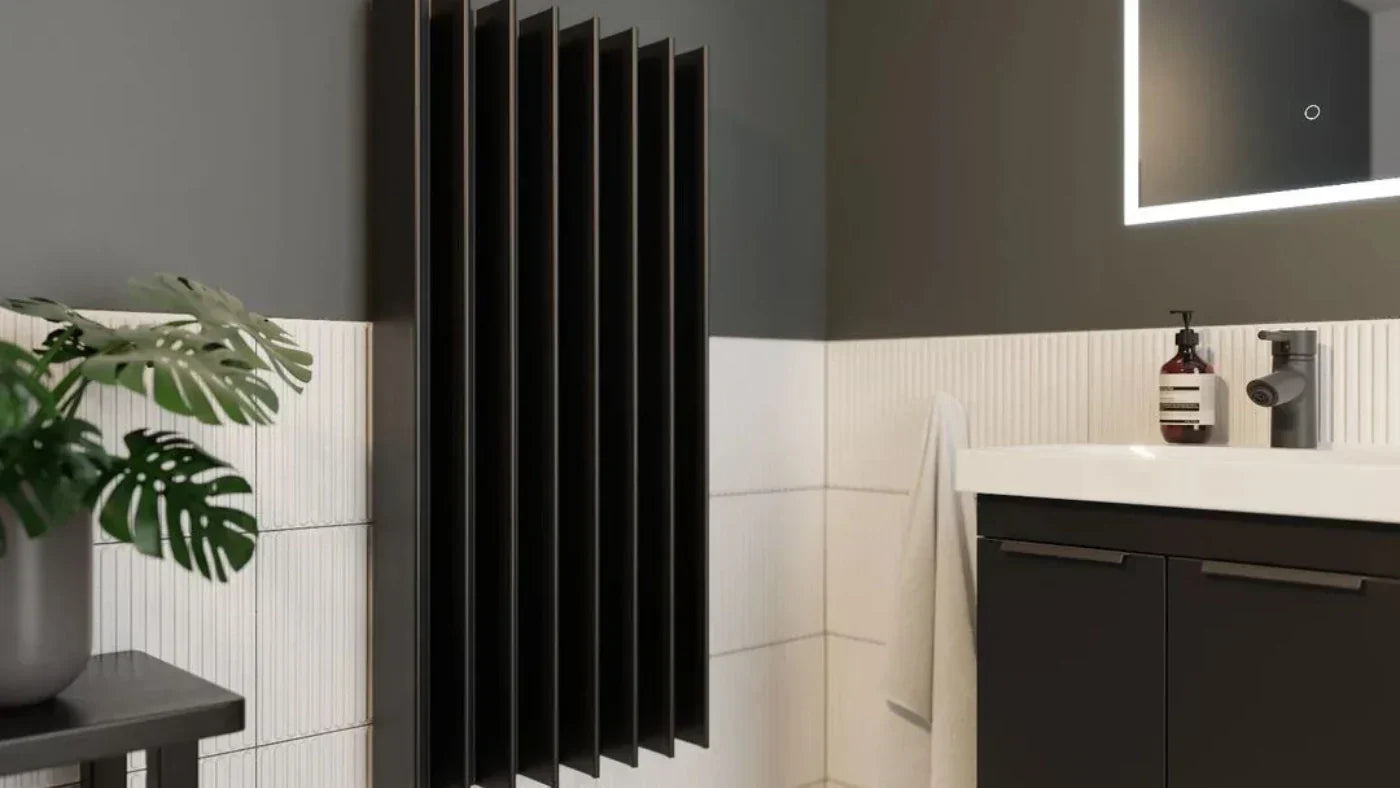
What we produced looks nothing like a traditional towel rail. In fact, to call it a rail may be misleading. However, it does sound better, perhaps, than a heated towel fin.
The Gordon difference
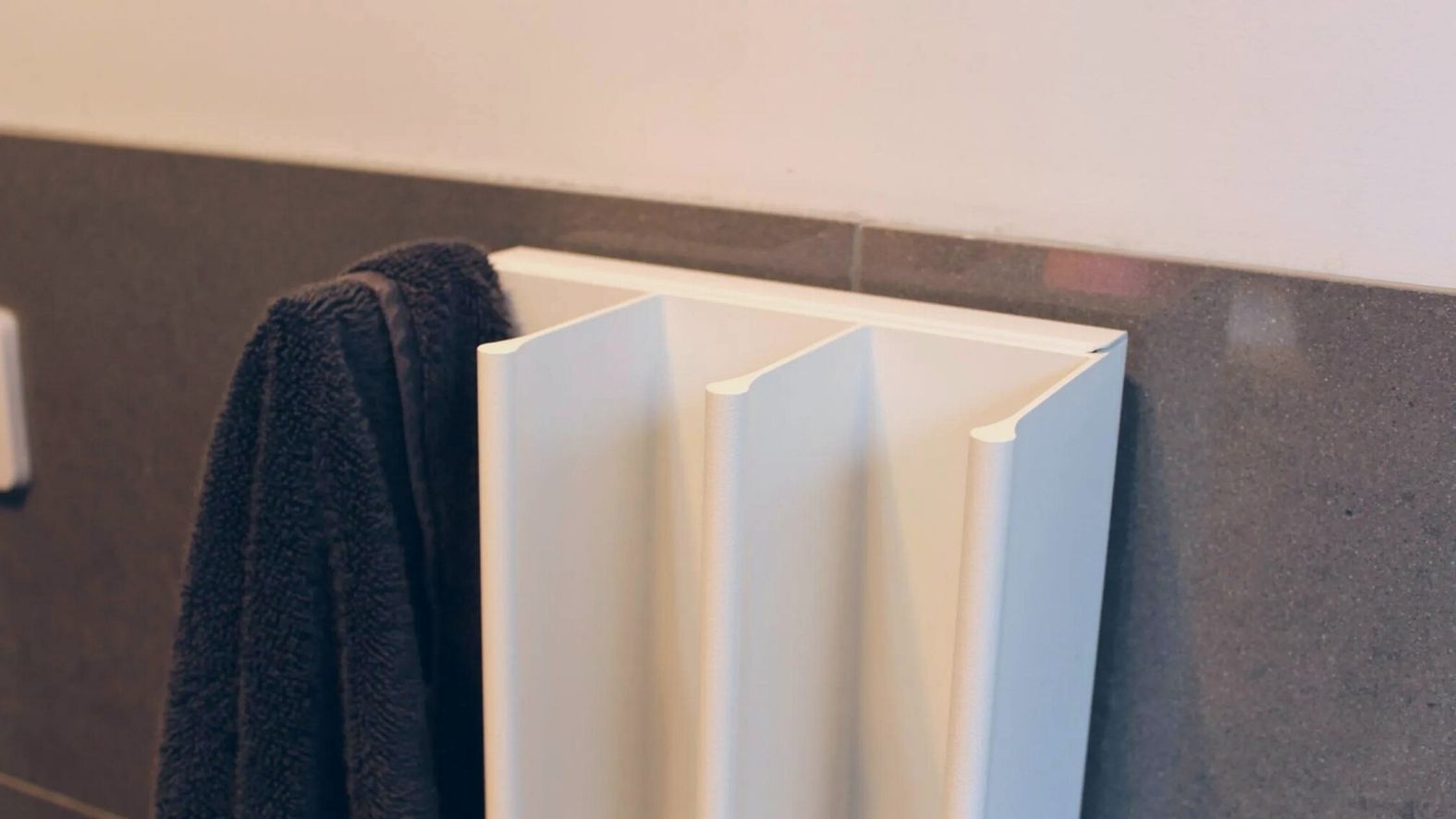
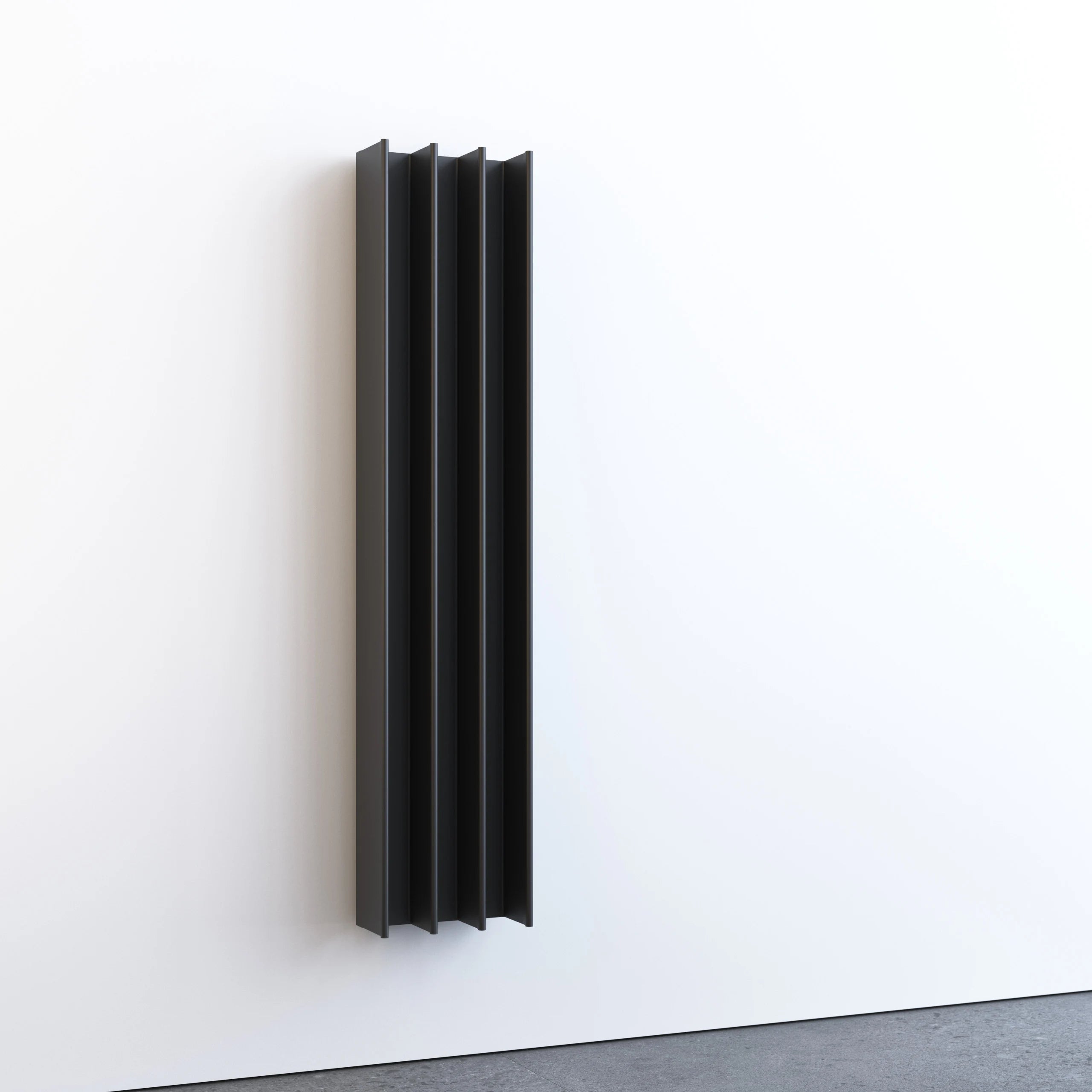
You see, instead of rails, our product, which we call Gordon, features hanging fins. The fins provide even more surface area while still taking up very little space, which means your towels will dry even more efficiently. In fact, tests show that Gordon will dry towels in a third of the time of ladder rails.
At the same time, the Gordon heated towel rail is power efficient and very quick to warm up. Part of the secret is that it's made from aluminium, which is a great conductor of heat and has a low thermal mass. Plus it's 100 percent recyclable.
The vertical design means Gordon loses only about 7 percent of its heat, as the warm air is projected onto the wall rather than into open space. Traditional horizontal ladder rails loose significantly more heat to the surrounding air, making them less efficient.
Vertical vs horizontal: the verdict
If you're choosing between a vertical heated towel rail and a horizontal ladder rail in 2026, the advantages of vertical design are clear:
Space efficiency: Vertical rails take up less wall space, perfect for small bathrooms or powder rooms.
Faster drying: Towels dry in a third of the time compared to horizontal rails thanks to better airflow and greater surface contact.
Energy savings: The Gordon uses just 200 watts and dries towels faster, meaning lower running costs.
More capacity: Four large bath towels fit on a single vertical rail without overlapping, compared to two or three on most horizontal rails.
Better hygiene: Faster, more complete drying means less bacterial growth and no musty odours.
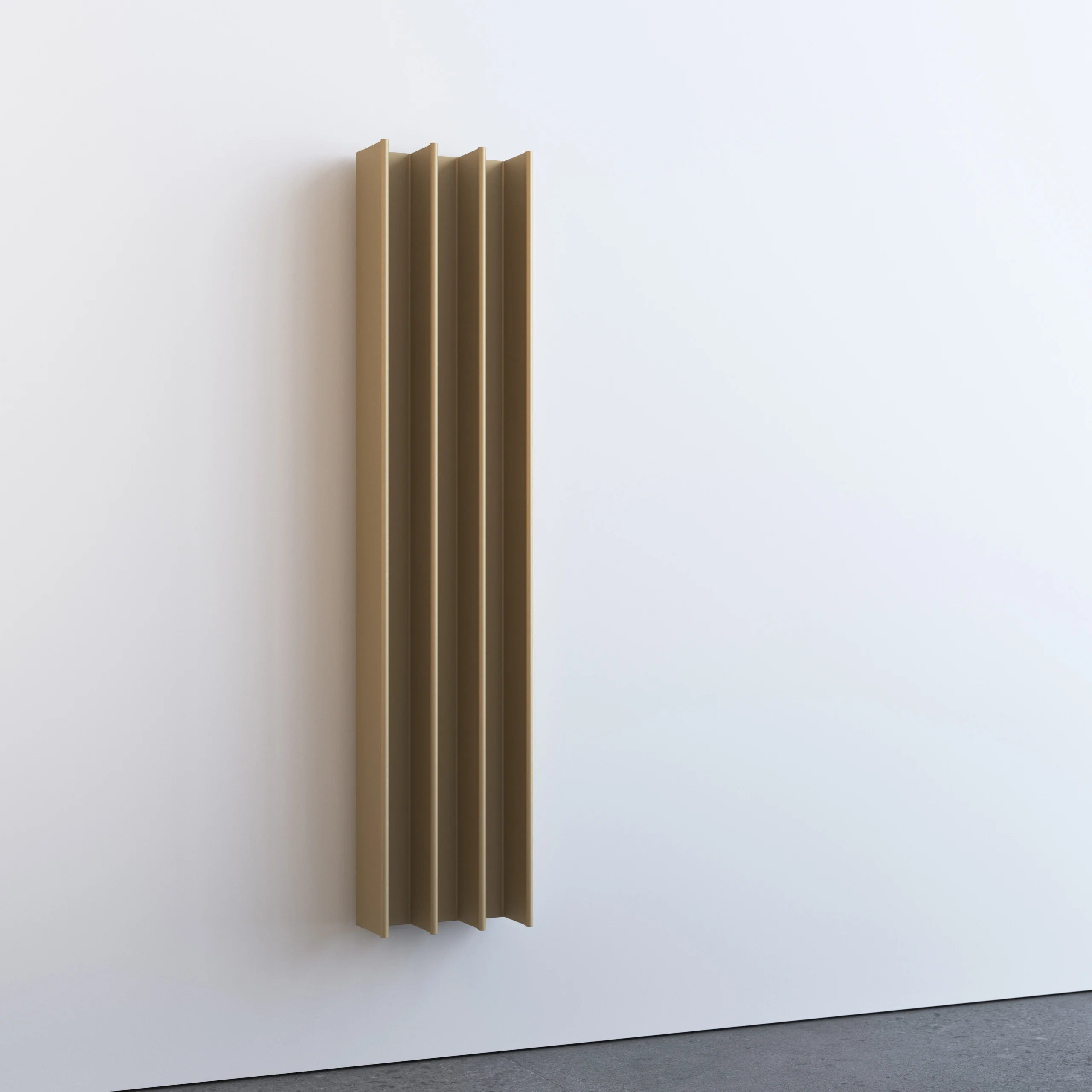
Gordon comes in five colour choices (Black, White, Dark Grey, Sandstone, and Gunmetal) and is covered in a non-slip powder coated textured finish. Find out more about Gordon and the benefits of vertical heated towels rails over horizontal towel rails on our website.